Toothpaste Tube Redesign
Overview
This project describes the redesign of a toothpaste tube. It was part of my HSE 521 – Methods and Tools in Human Systems Engineering class coursework. At the beginning of the semester, our instructor asked us to select a product to which we would apply all the concepts learned throughout the course.
As a team, we decided to work on redesigning toothpaste tubes, mainly because toothpaste tubes have not undergone significant changes in a very long time. We had previously worked on digital interfaces and wanted to challenge ourselves with something different — a physical product.
This experience was particularly valuable because everyone in the team came from different user experience backgrounds, mainly related to mobile devices or internet-based products. Applying the same user experience and design principles to a physical product taught us many new things, especially about testing with real users and the different types of observations we had to make.
When we began working on this project, we didn't even know what problems users faced — apart from our own. Personally, I kept losing the toothpaste tube cap. This became an interesting starting point, and we used heuristic evaluation to identify the different problems that existed. There wasn't a fixed problem statement at the beginning; discovering the issues itself was part of the coursework, and heuristic evaluation was the method we used for that.
Design Process
Surveys and Observations
The first one was surveys and observations. We sent out surveys to the people in our vicinity using snowball sampling. We asked them what difficulties they faced with this. I have the study linked there. The results mostly involved problems with sharing toothpastes and issues with the current design of the toothpaste cap. We basically wanted to see how people used it so that we could determine where else to look and what problems to try to solve. The surveys gave us good insights to make observations based on a wide variety of people who used it, including right-handed and left-handed users. We also ran an observational study where we observed people using toothpaste in context in the bathroom to see how they used the toothpaste when they squeezed it. Based on the survey responses, we identified specific areas we needed more information about and focused our observational experiments on them. For example, we would rather understand the amount of time a user thought about where to squeeze the toothpaste. We observed that not many people thought about it or even looked at the toothpaste. They just picked it up and squeezed it from wherever possible. So not a lot of thought went into it. We did observational experiments like this and gained a lot of insights.
Heuristic Evaluation
The third one was a heuristic evaluation. Now that we had our observations, this was an internal thing to do. We used Norman and Nielsen heuristics to perform a heuristic evaluation on these toothpaste tubes to determine their usability. The results of the heuristic analysis basically helped us find the major usability problems that existed. It revolved around these conditions: error prevention, flexibility, consistency, and standards. So, the toothpaste tubes were not being used consistently across populations, and we also found that there were not many instructions for standardization. So we saw those from heuristic evaluations. The heuristic evaluation led us to identifying these problems:
- Users cannot visibly determine the amount of toothpaste left in the tube.
- When a user squeezes from the center, the tube becomes harder to use as the paste decreases.
- Users are not given any guidance on maximizing the amount of toothpaste they can get from the tube.
- Users need more effort to optimally squeeze the paste out from the bottom.
Journey Mapping
And then we did journey mapping. It was basically where we created personas about our potential users, how they would use it, and how they would open the toothpaste. We created personas and user flows for all of them to see if our assumptions and observations so far were correct. These personas were based on our major surveys and heuristic evaluations so far. For each persona, we came up with pain points, usability touch points, interactions, and recommendations. I have attached a journey map and a persona below.
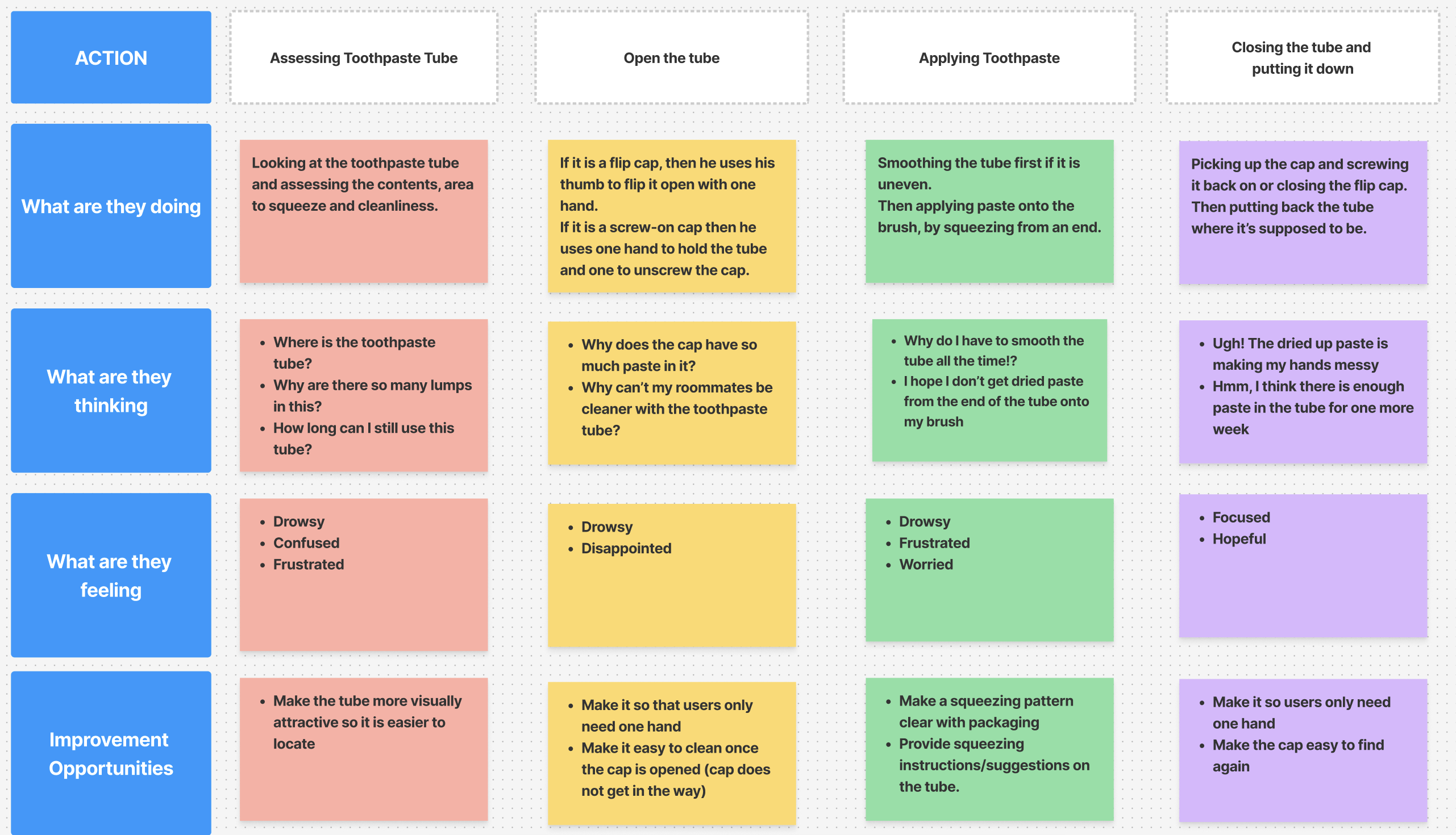
User Journey Map
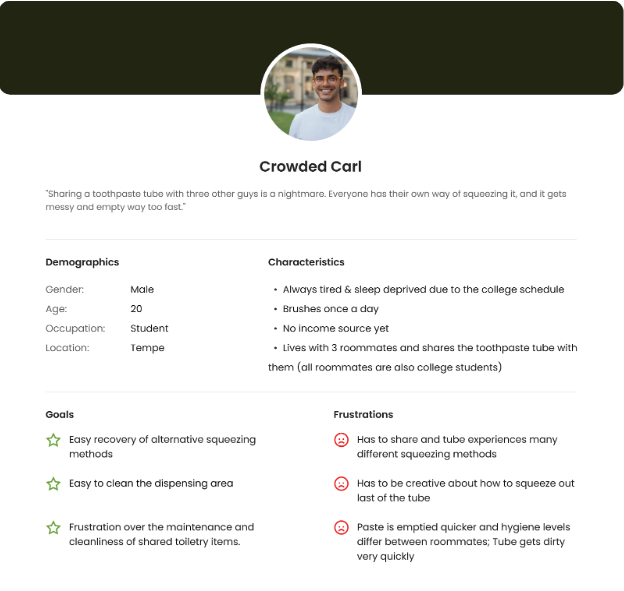
Persona
Prototyping
After that, we started working on prototypes. Based on these insights, we created ideas, developed solutions, and prototypes for different things. The ideas we had revolved around a folding design from the bottom, a folding design from the top, and a unique cap system that was a foldable cap. Instead of a screw out cap, a foldable cap. But a foldable cap provided more squeezability. Between these, we came up with the final product.
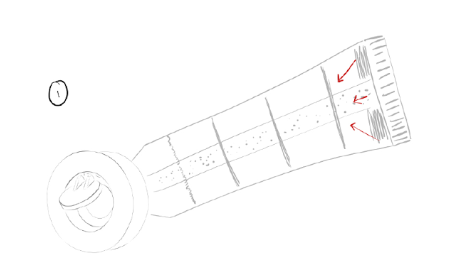
Prototypes
Final Product
The final product was designed based on the insights from the various user research methods we followed. The design of the final prototype included the following features.
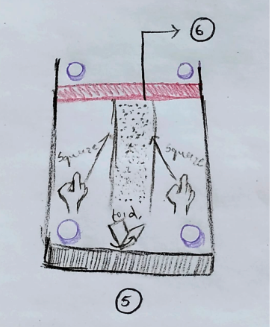
- It had a coarse-textured strip at the center to indicate a squeezing location. We also included a color gradient, with a darker color at the end that became progressively lighter to indicate where to squeeze from. The goal was to encourage people to squeeze from the end and apply pressure evenly between the center and the end.
- We added folding instructions in an accordion style so people could fold the ends, which motivated them to squeeze from the bottom and remove the remaining toothpaste completely.
- The tube also featured a hinged one-way dispensing cap that allowed easier and cleaner paste extraction.
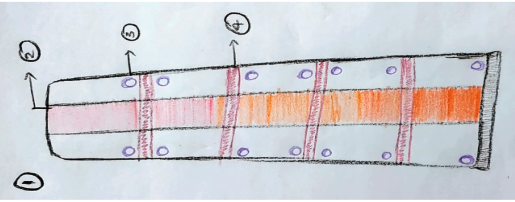
Final Design 1
Final Design 2